
The newly repaired intelligent water heater arrived back this morning from its circuit board transplant. We got it reinstalled as early as we could, and it was up and running again by lunchtime. Not clear, yet, what went wrong with it, but hopefully the manufacturer will get to the bottom of that after testing.
The accumulator tank's lost heat, obviously, in a week of not being heated, but will hopefully be back up to operating temperatures within a few days.
We've spent a lot of the rest of the weekend in the garden, keeping it looking as good as possible for the rest of the season. I've mown and edged the lawn: it's growing really slowly, now, but still looks neater after it's mown. There was less than one hopper full of clippings, whereas it can be nearly five when it's growing at full speed—that's for a weekly cut. Liz has managed to weed practically the entire garden this weekend, another testament to how much slower things grow (and germinate) at this point in the year. I've taken a large number of cuttings: lots of achillea (the Cassis mix, the white, Inca Gold, and Lemon from the colour wheel and herb garden), more Verbena bonariensis
, another clutch of agryanthemum stems (which root in water, before potting them up), sage, box, and fuchsias—the unnamed ones in the front garden and in the long border, as well as Army Nurse, Hawkshead, and Delta's Sarah. I'm trying to get some layers of the Virginia Creeper (in full, fiery splendour at the moment, over the front of the house) to take, as well, though they're a slow affair. I've also divided a number of perennials, ready to pass on to a friend of Liz's who has a new border to fill: the variegated Gardener's Garters grass, the Golden Alexander lysimachia, three heucheras, and (these are seedlings potted up) sweet rocket, aquilegia, catananche, gaura, and wild strawberries. They await collection next week, with some cuttings, and spring-divided perennials, to follow next year.
Liz has spent some of this afternoon plastering the front wall of the sitting room, which looks much better. We're trying to get all of the downstairs plastering finished in the next few weeks, so we can also paint before the Christmas decorations go up. That's partly so it looks better for the six weeks the house will be decorated...and partly because we then won't be able to do any plastering or painting downstairs until mid January.
In between things, I also collected as many elderberries as I could—which isn't many. It doesn't look like a great year for them: most of the corymbs didn't have a high proportion of set berries, and they weren't as plump as they often are. Still: I bulked them (1.8kg) up to 3kg of fruit with some frozen blackberries, and have set off a 2 gallon batch of wine: fruit, boiling water, nutrient. Pectolase before I go to bed, and then yeast tomorrow. On Thursday (or maybe Friday), I'll strain onto sugar in two demijohns.
Showing posts with label cuttings. Show all posts
Showing posts with label cuttings. Show all posts
Sunday, 11 October 2015


Monday, 28 September 2015
Autumn Cut
We've had a long weekend, of four days at home (three for Liz, who had to work today), which has meant being able to get quite a lot done.
This year, we've been maintaining the hillside differently to the previous year. Instead of cutting it all back every time, I've only mown a pair of paths up from the main entrance: one up to the apple walk, and one to where the plum arch will one day go. These two points are where you can then go through to the middle section of the hillside, where the clearings are. The rest of the orchard I've left uncut, and the grass has grown up and gone to seed, and there's achillea, scabious, and...well, brambles, gorse, ragwort, and thistles.
However, it's probably looked better for this, and the colours have gone from a bright green, to deeper green, and on to browns and golds as the grass flowers. We think it's probably been better for wildlife, too: and it's taken less work, as trimming the paths only takes about thirty minutes.
As autumn comes, though, we need to cut the grass down. If we let it be, it'll eventually form ugly tussocks, again, and brambles will grow up and cover everything, and we'll be back to where we were in 2012. We'd like to, eventually, plant the orchard with lots of prairie-like flowers and grasses, which will make excellent foraging for bees and other insects, as well being attractive. However, we're a long way from that, simply because of the scale of the area. For now, we need to cut everything back in the autumn, which will keep it neat over the winter, and stop the grass getting too thuggish.
That's what we've done, with me mowing with Sigrid, while Liz raked up. We've built a few bays out of old pallets, and heaped the material into these. It should, over the next twelve months, break down enough to use as mulch.
Needless to say, it's been hard work, and taken a day and a half, but the hillside looks much tidier, and should hopefully go through the winter in better state. While we had the brushcutter out, I've also done the verges, and also cut down the grass in the copse, and along that side of the garden. I didn't manage to do so last year, and the daffodils didn't look as good, buried in long grass, this spring.
Long overdue, we've also sorted out the composting area, below the wood shelter. There was a lot of rubbish in there, which we've shredded, or moved to the log piles in the back, or in the copse, and we've made space to put out the four Dalek composters. We've emptied the oldest compost into these: it's not quite ready to use, but hopefully will have finished breaking down by the spring, when we'll use it on the fruit cage beds. That meant we could get all the accumulated material into the middle and right hand bays, leaving the left one empty. That should be enough space to see us through the winter, as, once we stop weeding, there's not as much being produced. The Daleks and, hopefully, the right hand bay at least, can be used in the spring, and we can go into next year with more composting space. We never quite got on top of it all this year, which has left us with heaps in front of the compost bays, which isn't lovely.
The other outside job that we've been able to tick off is getting the cables for external CCTV cameras routed into the roofspace. They're unconnected at either end, and are waiting in the loft (to bring together into the central loft space, and the down into the dressing room, where the controller will live), and at the camera points (ready for me to mount the cameras).
That done, we had a few hours yesterday to start tidying the workshop, which has been in a bit of a state for over a year, since we started the insulation work. We've emptied a lot of it into the preservatory, and I'll continue tidying on Wednesday.
Today, as I was on my own, I've drained the radiators of the cleanser mix, and refilled them all with 'fresh' water (it's not, really; it's from the accumulator tank), and added sealant. That'll run through the house pipes and radiators for a few weeks, making sure there aren't any pinholes or weeping joints.
Draining twenty-something radiators, and refilling them, took almost the whole day, but I also managed to take a number of cuttings: a pot of each of the Lemon, Inca Gold, Walther Funcke, cassis, and white achilleas; Verbena bonariensis and 'Bampton'; and the actaea we got at Tatton.
After we painted the apple walk a couple of weeks ago, we didn't get round to tying the apples back onto the framework, so I've gone up and done that. Finally, I've got hold of some extra long coach bolts, which I'm using to better secure some of the wood shelter's frame.
This year, we've been maintaining the hillside differently to the previous year. Instead of cutting it all back every time, I've only mown a pair of paths up from the main entrance: one up to the apple walk, and one to where the plum arch will one day go. These two points are where you can then go through to the middle section of the hillside, where the clearings are. The rest of the orchard I've left uncut, and the grass has grown up and gone to seed, and there's achillea, scabious, and...well, brambles, gorse, ragwort, and thistles.
However, it's probably looked better for this, and the colours have gone from a bright green, to deeper green, and on to browns and golds as the grass flowers. We think it's probably been better for wildlife, too: and it's taken less work, as trimming the paths only takes about thirty minutes.
As autumn comes, though, we need to cut the grass down. If we let it be, it'll eventually form ugly tussocks, again, and brambles will grow up and cover everything, and we'll be back to where we were in 2012. We'd like to, eventually, plant the orchard with lots of prairie-like flowers and grasses, which will make excellent foraging for bees and other insects, as well being attractive. However, we're a long way from that, simply because of the scale of the area. For now, we need to cut everything back in the autumn, which will keep it neat over the winter, and stop the grass getting too thuggish.
That's what we've done, with me mowing with Sigrid, while Liz raked up. We've built a few bays out of old pallets, and heaped the material into these. It should, over the next twelve months, break down enough to use as mulch.
Needless to say, it's been hard work, and taken a day and a half, but the hillside looks much tidier, and should hopefully go through the winter in better state. While we had the brushcutter out, I've also done the verges, and also cut down the grass in the copse, and along that side of the garden. I didn't manage to do so last year, and the daffodils didn't look as good, buried in long grass, this spring.
Long overdue, we've also sorted out the composting area, below the wood shelter. There was a lot of rubbish in there, which we've shredded, or moved to the log piles in the back, or in the copse, and we've made space to put out the four Dalek composters. We've emptied the oldest compost into these: it's not quite ready to use, but hopefully will have finished breaking down by the spring, when we'll use it on the fruit cage beds. That meant we could get all the accumulated material into the middle and right hand bays, leaving the left one empty. That should be enough space to see us through the winter, as, once we stop weeding, there's not as much being produced. The Daleks and, hopefully, the right hand bay at least, can be used in the spring, and we can go into next year with more composting space. We never quite got on top of it all this year, which has left us with heaps in front of the compost bays, which isn't lovely.
The other outside job that we've been able to tick off is getting the cables for external CCTV cameras routed into the roofspace. They're unconnected at either end, and are waiting in the loft (to bring together into the central loft space, and the down into the dressing room, where the controller will live), and at the camera points (ready for me to mount the cameras).
That done, we had a few hours yesterday to start tidying the workshop, which has been in a bit of a state for over a year, since we started the insulation work. We've emptied a lot of it into the preservatory, and I'll continue tidying on Wednesday.
Today, as I was on my own, I've drained the radiators of the cleanser mix, and refilled them all with 'fresh' water (it's not, really; it's from the accumulator tank), and added sealant. That'll run through the house pipes and radiators for a few weeks, making sure there aren't any pinholes or weeping joints.
Draining twenty-something radiators, and refilling them, took almost the whole day, but I also managed to take a number of cuttings: a pot of each of the Lemon, Inca Gold, Walther Funcke, cassis, and white achilleas; Verbena bonariensis and 'Bampton'; and the actaea we got at Tatton.
After we painted the apple walk a couple of weeks ago, we didn't get round to tying the apples back onto the framework, so I've gone up and done that. Finally, I've got hold of some extra long coach bolts, which I'm using to better secure some of the wood shelter's frame.
Sunday, 22 February 2015
Mulch Preparation
We've got a load of mulch arriving this week, ready to spread on the beds. That means that the first weeding of the year is now urgent, because the mulch does an excellent job of reducing new seedlings, but just gives existing weeds a boost, which isn't quite what we want. As well as weeding, we've also pruned the apples and pears on the hillside, tying in the slow winter growth in the apple walk as we go; pruned the fruit bushes; and admired the emerging snowdrops.
We also potted up ten new hellebores that arrived this week, which are now in the front garden growing on; six Chocolate Cosmos; and the 20-odd tender yellow things I can never remember the name of. Argyranthemum/margeurites, possibly. We take cuttings of them each autumn to over-winter, and they're out-growing their modules, now.
The other thing we managed was to tie together the willow growing down the sides of the septic tank, to start forming the arched tunnel over the mini-sheds. There's some way to go, admittedly, but you finally get an idea of what it will eventually achieve, which is nice.
We also potted up ten new hellebores that arrived this week, which are now in the front garden growing on; six Chocolate Cosmos; and the 20-odd tender yellow things I can never remember the name of. Argyranthemum/margeurites, possibly. We take cuttings of them each autumn to over-winter, and they're out-growing their modules, now.
The other thing we managed was to tie together the willow growing down the sides of the septic tank, to start forming the arched tunnel over the mini-sheds. There's some way to go, admittedly, but you finally get an idea of what it will eventually achieve, which is nice.
Tuesday, 19 August 2014
Late Summer Flowers
After weeks of sweetpea arrangements, they're starting to come to an end, and so this week's centrepiece arrangement is a bit different (apologies for the shaky photo).

Golden rod, achillea, echinacea, grasses, and lysimachia in this week's flower arrangement (© Ian 2014)
We went up on the hillside, too, and it's very pleasing how the apple walk and graftlings are coming on. The apple walk's structure is a lot clearer than I thought it would be, in its first year, and the shoots need tying in again. In the graft bed, I'm delighted that we seem to have three viable Hessle pears, two each of the apples, Crimson Superb and Craggy's Seedling (a third, of each, is in the walk, grafted directly). There's only one of each of quinces Ivan and Vranja, and medlar Dutch, which is, admittedly, all we needed to make the effort a success. Sadly, the medlar Royal didn't take, in any of the three attempts, but there you go. I make that a 12 out of 21 success rate, for my first grafting attempts.
Tonight, we potted on three giant scabious, a load of Lysimachia ephemera, and a tray of Hidcote lavenders; all seed-grown, the first and last from the RHS. That's freed up a couple of module trays for some perennial plugs that will arrive soon.
Monday, 14 April 2014
A Full Greenhouse
We didn't do anything much in the garden over the weekend other than walk round it, as Philip, Rachel and baby Luke were visiting. It must be said that walking round it was rather nice, as it's an opportunity to ignore the weedy patches, and the not-doing-anything-yet herbaceous perennials, and enjoy the daffodils in full glory, the swelling buds on trees, and the daily lengthening of rhubarb stems.

There are a lot of small lavenders (on the right), which were intended for the edges of the herb garden. We've been doing a bit of a think about this: further work is probably off the cards until the autumn, as anything we do will be trampled by wall insulation this summer. The lavender will have to be planted out in a temporary location. On the far bench are some of the sweet peas, the tulbaghia and agapanthus from Tatton Park, a couple of dozen deschampsia from seed last year, and in the back left the cut-off rootstocks from grafting. These have come into leaf, and look like they've rooted, which is marvellous news. They'll go into a nursery bed for future grafting. On the top shelves on the right are a load of vegetable seedlings: brassicas, beetroot, spinach, chard. There are also some perennials: six herbaceous potentillas, for example. On the left are ungerminated seeds (which don't need so much light), and other perennials: half a dozen astilbes, some geraniums, some clivia (technically not hardy, but they've done fine), and some hostas that are in pots waiting for a bog garden to be built. And, also, a tray of hosta seedlings from last year, which are just coming out for their first 'adult' year.

After they'd set off home, though, we sowed a number of seeds (marigolds, stipa, pennisetum, lupins, verbena, cucomelon, I think), and I pottered briefly in the greenhouse. This is our first spring with a greenhouse, and the young plants we've overwintered in it are much further on than those in open ground. The extra warmth and protection are fantastic. It's full, inevitably. Many of the plants in it are going to be forced out soon: they're hardy plants, that didn't need the greenhouse (even un-heated, it's got no lower than -1°C, and mostly been frost free), but have clearly benefitted. However, with a steady train of seedlings germinating inside, they older plants will need to make way for new plants, and eventually even these will get planted out, to be replaced with tender veg. We've got germinated tomatoes, chillis, sweet peppers, and aubergines, which will all occupy the glasshouse for the summer.
For now, though, it's almost all perennials, and about a hundred sweet peas.
Greenhouse full of young plants, grown on over the winter, and ready to plant out soon (© Ian 2014)
One-year-old hostas (© Ian 2014)
Wednesday, 2 October 2013
Greenhouse
I've wanted one for about 14 years, and finally, we have one. Our little 8x6' greenhouse arrived today, as a stack of toughened glass panes, and several bundles and boxes of parts. We'll put it up at the weekend, hopefully, on the back patio.
In other news, I've started a bucket of greengage wine, with some frozen fruit we weren't getting round to using (Liz wasn't enamoured of the jam we made originally). Needs 250g pearl barley, unusually, as well as 1.5kg of stoned fruit.
Last night, we finished the spiced berry cordial, by adding 2kg of sugar, three teaspoons of each of nutmeg, allspice, and ginger, two big cinnamon sticks, and thirty cloves. That was simmered for five minutes, then bottled.
We've also picked all the apples from the front left established apple tree (which we pruned into quite a pleasing, goblet shape in the winter), which were starting to fall rather readily. There's probably been 5kg of windfalls, and 20kg of picked fruit, which bodes well. I'm hoping to build a scratter over the weekend, to help pulp/crush apples for pressing.
Friday, 30 August 2013
Survey
It's the time of year to take semi-ripe cuttings of perennials, so yesterday, with the help of a fosterling, I took a number of pots of lavender, box, willow, dogwood ('Midwinter Fire'), Cornelian cherry, and a yellow-flowered herbaceous perennial from Jenny's garden the name of which constantly eludes me. They were all treated with rooting hormone (apart from the willows), and are in warmed propagators to give them some warmth and humidity. Before that, then I painted half of the window frames on the front of the house, and Liz weeded, as well as painting the trough planter for the goji berries.
We spent most of today on the hillside, which has been strimmed again. It might need doing once more this autumn, but that might not happen. Having done so, we went around and painted the trees with an anti-deer concoction of chilli powder in oil. Hopefully that will help keep them away: they've browsed the leaves from one of the tall shoots on one of the Victoria plums. While going round, I used a GPS app on my phone to take a reading of each tree's location, as we don't actually have a plan of which tree is where. I'm not sure it's worked perfectly, but it provides some idea.
 |
| Location of the Fruit & Ornamental Trees in the Orchard ( Ian 2013) |
I'm going to work on plotting it with labels, too.
I also measured the length of the putative apple walk we're thinking of building in the 'top right' (left in the plan above) corner, which an avenue of trees leads you towards, and which takes you up into the first clearing. It looks like it'll be about 24' long: as we're planning trees 6' apart (probably with imitation 'trunks' intercalated), in an arch 8' across; each tree can then be espalier trained 3' each side. That makes for five trees up each side, so we need to start planning varieties -- and digging two planting trenches.
Finally, as we went round, I've done a bit of work training the primary laterals on the fruit trees which are tall enough, so that they're more, well, lateral. For example, most of the plums have reached a height where their leader shoot was cut, which promotes several new shoots to break into growth at the tip (about 6' tall). These will be the primary framework of lateral branches, which will ideally be reasonably horizontal (for many reasons, not least that this makes a larger crotch angle between trunk and branch, which is much stronger, mechanically). However, they start life really vertical, and need to be tied down, which I've done with guy twines.
Sunday, 28 April 2013
Herbs and Mulching
Yesterday we finished making the new wildflower/cutting flower bed in front of the quince. We'd lifted the turves last weekend: the ground then needed digging over to removes stones, the damaged land-drain needed repairing, and then it was ready to sow.
.jpg)
We've put four bamboo obelisks in the bed, which we'll plant sweet peas up. As the bed's roughly triangular, that's demarcated three beds, into each of which we've sown a different pack of seeds. One is a pastel meadow mix (gypsophila, Bishop's flower, poppies and cosmos); one is an 'Amethyst and Sapphire' mix (anchusa, salvia, cornflower, verbena); and the last is a combination of several wildflower annual mixes.
Once that was done, we spent the rest of the afternoon starting to mark out the beds for the herb garden. We lifted enough turf to clear a space about 6m by 6m last week, which we've now marked. The garden will be a series of beds about a metre square, set at 45°. Some will have herbs, some will have roses, and we might also include some with spring and summer bulbs in, and some more obelisks with climbers, to add some height.
The edging, we haven't quite decided on. We long intended to use box, mixed with lavender, but this isn't totally fixed. We might use euonymus (probably a variegated form) as an alternative. Partly this is because of the difficulty in propagating more box from the Witley clones, or the cost of purchasing the 500-odd plants we'll need.
Nonetheless, the pattern's more or less decided, subject to tweaks as we uncover more soil, and can lay out the grid, and work out where and how the boundaries fall.
Herb garden outline ( Ian 2013)
Then, today, we've weeded all the fruit beds, and put down a triple mulch: a layer of compost, covered by a layer of cardboard (degradable weed barrier), covered with a layer of conifer chippings. The last of these should mean that the ericaceous nature of the soil is maintained (particularly important with the blueberries), although it'll take a while to break down completely. I shall try to add grass clippings during the summer, to increase the nitrogen content, and off-set the nitrogen lock-up that the carbon-rich chippings will cause.
Hopefully, that should now mean that the weeding of the fruit beds is very easy this year, as well as ensuring that the bushes are well fed and productive.
Sunday, 2 December 2012
Herbs
We had a weekend in Cambridge (a displaced half-yearly get-together, which was really good), and popped in to our old garden centre on the way home. As well as admiring Christmas trees, and finding one decoration we liked (very restrained), we also picked up a second pair of loppers (on offer; we thought they'd come in handy clearing the hillside), and a load of end-of-season herbaceous plants. That included an aquilegia, some bronze fennel, some variegated thymes ('Foxley'), and a pair of white rosemaries (Rosmarinus officinalis var. albus).
They don't have an immediate home: the herbs will be grown on, for the future herb garden. A couple of the thymes might go in the front garden wall, that said, before layering them for more plants.
Not much to report, therein: the weekend was lovely, with much food and games, but no photos. We're at home next weekend, and will probably put up the Christmas decorations, as well as trying one of the hams we cured earlier in the autumn.
They don't have an immediate home: the herbs will be grown on, for the future herb garden. A couple of the thymes might go in the front garden wall, that said, before layering them for more plants.
Not much to report, therein: the weekend was lovely, with much food and games, but no photos. We're at home next weekend, and will probably put up the Christmas decorations, as well as trying one of the hams we cured earlier in the autumn.
Sunday, 4 November 2012
Pond Practice
Our visit to Molly was partly with the intention of renovating her garden pond (the traditional exchange of labour for food and company!). She had a small pond, a few feet in diameter, and about a foot deep, but it wasn't entirely satisfactory. The fountain was unimpressive (it had to be turned down low, or it threw the water out of the pond), and it was rapidly out-grown by the plants.
So we dug her a new one.


Of course, no trip to Ludlow is complete without a trip to the plant stalls on the market, and this time was no exception. We found a really lovely oak-leaved hydrangea (H. quercifolia): it has pretty leaves, with good autumn colour. It would hold its own, I think, as a deciduous shrub, but it also flowers (large, white, typical hydrangea flowers) in late summer. We also pinched some cuttings of a red-stemmed variegated willow, and half a dozen kaffir lilies (Schizostylis coccinea). Ample reward for pond digging, I think.

So we dug her a new one.
Newly dug pond: ledge all the way round (bit bigger in top right, due to soakaway pipe) and with a wildlife escape ramp in the top left. The pond's 6'x8', and around 2' deep: there was about three barrows of rubble buried in the soil (© Ian 2012)
Half-way through filling up, before trimming (© Ian 2012)
Pond filled and fountain running. The edging will be tidied up after planting (© Ian 2012)
Of course, no trip to Ludlow is complete without a trip to the plant stalls on the market, and this time was no exception. We found a really lovely oak-leaved hydrangea (H. quercifolia): it has pretty leaves, with good autumn colour. It would hold its own, I think, as a deciduous shrub, but it also flowers (large, white, typical hydrangea flowers) in late summer. We also pinched some cuttings of a red-stemmed variegated willow, and half a dozen kaffir lilies (Schizostylis coccinea). Ample reward for pond digging, I think.
Oak-leaved hydrangea, along with willow cuttings (front left) (© Ian 2012)
Sunday, 29 July 2012
Potting On
The numerous plants we bought at Tatton Park, combined with a number of other plants that have outgrown their pots, and lots of seedlings, conspired to require a potting up session.

The clematis, hydrangea, deschampias, and eryngium are all fine in their pots, but the heucherellas needed bigger pots, and most of the other grasses needed either bigger pots or topping up. I realise I forgot the fifteenth new plant in my Tatton round-up: we also bought a variegated reed grass, Calamagrostis x acutiflora 'Overdam'.
The box I obtained from Witley Court needed bigger pots (very root-bound!), and looks much more sensible in 2l pots. A tray of angel hair stipa (S. tenuissima) that we sowed earlier in the year has done really well: nominally 40 seeds, but we've potted on over fifty little plants, which is great. (Far left in the photo.)

Newly potted-up plants (© Ian 2012)
Lastly, we potted up a few dozen lavender seedlings and cuttings (far right).
Domino appears to think he was important in this process, as he's guarding the plants in the photo. I'm not sure I'd agree, though.
Sunday, 27 May 2012
Heucheras
We've spent the weekend in Ludlow, visiting Molly, which—as normal—has been a pleasant and relaxing break. She's just purchased a small plot of land adjoining the garden, which has made a significant difference to the house. The sitting room window is now not overshadowed by a boundary wall; the pond can double in size; she has space for a vegetable/fruit plot; and there's space for off-road parking. Of course, some of this is still theoretical. The wall needs its demolition completing; the pond must be dug (and relined); the paving slabs must make way for veg beds; the parking alone has actually been accomplished. That said, the difference it will make is clear, and we did a few bits to help get her there, as well as things around the rest of the garden that require greater height or strength: pruning a philadelphis that's outgrown its space (while avoiding a montana clematis growing through it!); pruning the apricot and plum trees; making and filling a small bed next to the parking space; emptying the compost bin; replanting a large tub of tomatoes; and the like. Needless to say, we were amply rewarded come meal-times.

Ludlow has an excellent market, with several plant stalls, our favourite of which is in the Buttercross. True to form, we wandered out for a walk, and came back with bags full of plants. Three new heucheras, a Ninebark 'Lady in Red' (Physocarpus opulifolius), and a 'Black Lace' elder (Sambucus nigra). Combined with some fuchsia and pelagonium cuttings, a couple of silver birch seedlings, and a corkscrew willow, pilfered from the garden, it was quite a stocking-up visit.
New heucheras (© Ian 2012)
Ludlow has an excellent market, with several plant stalls, our favourite of which is in the Buttercross. True to form, we wandered out for a walk, and came back with bags full of plants. Three new heucheras, a Ninebark 'Lady in Red' (Physocarpus opulifolius), and a 'Black Lace' elder (Sambucus nigra). Combined with some fuchsia and pelagonium cuttings, a couple of silver birch seedlings, and a corkscrew willow, pilfered from the garden, it was quite a stocking-up visit.
Sunday, 16 October 2011
Winter Hanging Baskets
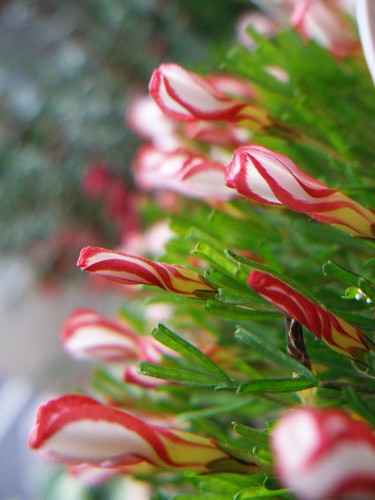
The last order needed for the winter hanging baskets arrived this week, so once we'd popped to the garden centre to buy ten white winter flowering heathers (Erica x darleyensis Silberschmelze), we were able to plant these. Out came the geraniums and verbena (geraniums repotted to over-winter, and verbena cuttings taken), and in went a bronze sedge, two heathers, five cineraria (previously in the hanging baskets on the arbour), and two candy-cane oxalis (O. versicolour: picture by Tanakawho). The oxalis are extremely unprepossessing: about 10mm long, and 5mm diameter, and shaped like a miniature shallot. Here's hoping they do something!
We also planted the baskets of paperwhite narcissi that we enjoyed over Christmas 2010. We spread them over several plantings last year. It didn't seem to make much difference, so we've done them all at once.
The fruit tree order I mentioned last weekend is now placed, so in a couple of months we'll receive seven fruit trees, some hedging plants, and a dozen Midwinter Fire dogwoods.
Monday, 19 September 2011
Compost Heap Jelly & Spiced Berry Cordial
Yesterday, we boiled up a bag of frozen citrus fruit hulls and peelings, and apple cores and peelings, which I've been storing as they were 'created' for several months. This makes this jelly extremely frugal, as it uses the left-overs that would otherwise go straight on the compost heap, and the only paid-for ingredient is sugar.
Once the pulp was squeezed (yes, a cardinal sin in purist jelly making, as it won't be perfectly clear: I prefer to have ten jars of 'murky' jam, than five of clear jelly!), we added 1lb of granulated sugar to every pint of juice, and boiled it to setting point. Granulated, as the fruit is about as pectin- and acid-packed as it comes (citrus fruit and apple cores!). The result is a fruity and marmalade-like jelly, with a faint floral hint (those mischievous elderflowers that came with the oranges and lemons from the cordial), and is delicious. Thank you, River Cottage Bites.
The other thing we started yesterday was the spiced berry cordial. Having left the fruit mush to break down, I squeezed every drop of juice possible out, and added 500g of sugar for every 1kg of fruit we started with (in this case, 3kg), making 3l of liquid. We added two cinnamon sticks, 20 cloves, and 2 tsp of each of ground ginger, allspice, and nutmeg. This is brought to the boil, and simmered for five minutes. I then bottled this, hot, into warmed screw-top bottles: with the heat, and the sugar, I think it should keep just fine until Christmas.
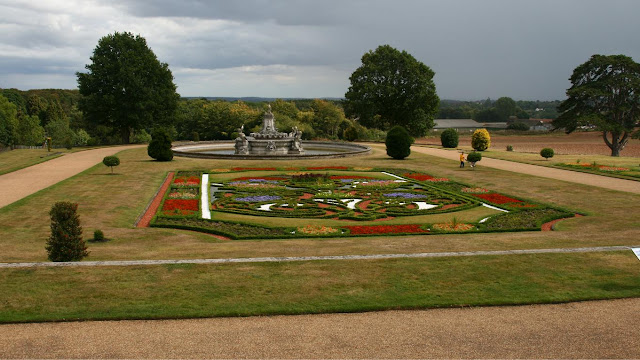
In my break for lunch, I took about three dozen cuttings of the heritage box we bought at Witley Court. It's a bit late in the season, but there you go.
Once the pulp was squeezed (yes, a cardinal sin in purist jelly making, as it won't be perfectly clear: I prefer to have ten jars of 'murky' jam, than five of clear jelly!), we added 1lb of granulated sugar to every pint of juice, and boiled it to setting point. Granulated, as the fruit is about as pectin- and acid-packed as it comes (citrus fruit and apple cores!). The result is a fruity and marmalade-like jelly, with a faint floral hint (those mischievous elderflowers that came with the oranges and lemons from the cordial), and is delicious. Thank you, River Cottage Bites.
The other thing we started yesterday was the spiced berry cordial. Having left the fruit mush to break down, I squeezed every drop of juice possible out, and added 500g of sugar for every 1kg of fruit we started with (in this case, 3kg), making 3l of liquid. We added two cinnamon sticks, 20 cloves, and 2 tsp of each of ground ginger, allspice, and nutmeg. This is brought to the boil, and simmered for five minutes. I then bottled this, hot, into warmed screw-top bottles: with the heat, and the sugar, I think it should keep just fine until Christmas.
The East Parterre at Witley Court, with box edging (© Ian (2011))
In my break for lunch, I took about three dozen cuttings of the heritage box we bought at Witley Court. It's a bit late in the season, but there you go.
Monday, 29 August 2011
Midlands
As mentioned, we've been away for the weekend, visiting Liz's grandmother in Ludlow. In addition to stealing cuttings and divisions from her garden, we also went to Witley Court for a day.
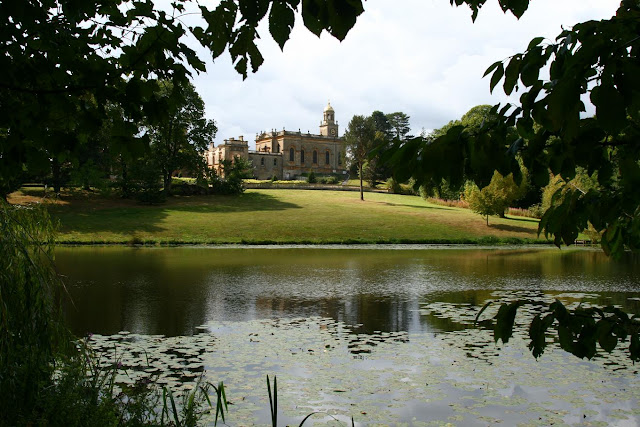
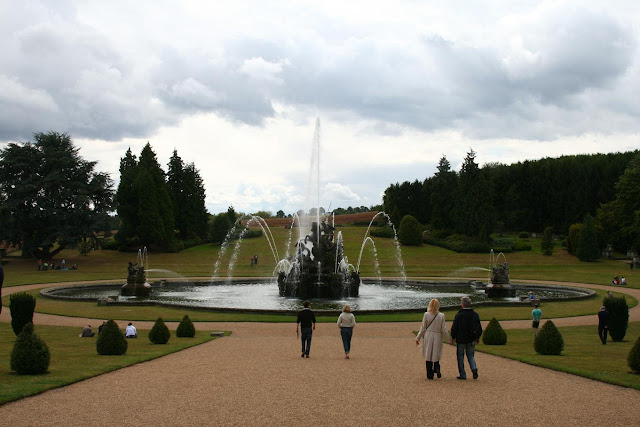
The grounds, a magnificent country estate, contain the ruins of the 19th century manor house (itself a renovation of a Jacobean house, in turn built over a medieval property) that was burnt out in 1937 and never repaired. Now owned by English Heritage, it's a shell of a building, fascinating for a depiction of the type of building. The grounds are in the process of being restored, and still contain two fountains (one working).



The box hedging for the parterres was grown from cuttings taken from the original 1850's planting. When restoration began in the early 2000's, these were—to say the least—overgrown. The new plants are more typical of box hedging (6" high). However, the restoration work has produced a surplus of plants, which were for sale. We are, therefore, now the proud possessors of 18 box plants dating from the same period that the house was built: perfect stock for our own herb garden hedging. I'll work on taking cuttings and increasing the number over the next few years.
Less excitingly, we also called in at three garden centres on the way home (Dobbies, Percy Throwers, and our local Armitages), and picked up a trio of lemon cypresses, for the front garden.
Witley Court (© Ian (2011))
The Perseus & Andromeda Fountain (© Ian (2011))
Nesfield's South Parterre and the restored Perseus & Andromeda Fountain, looking towards the South Portico (© Ian (2011))
The East Parterre, with the Flora Fountain (© Ian (2011))
Gazenias in the East Parterre (© Ian (2011))
The grounds contained a couple of living willow sculptures, including this one, which caught our eye.
Willow tunnel (© Ian (2011))
Less excitingly, we also called in at three garden centres on the way home (Dobbies, Percy Throwers, and our local Armitages), and picked up a trio of lemon cypresses, for the front garden.
Sunday, 17 October 2010
Cold Frame
We had a visit over the weekend from university friends, Ann and Alan. It's been a little while since we saw them properly, though we were at their wedding in August. They set off home earlier today, which left us time to get out in the garden for a bit.
We've planted some pansies (Amber Kiss) in the troughs near the porch, and will try to plant more in the hanging baskets over the next week or so. This necessitated removing the Busy Lizzies from the troughs: they were rather past their best, and I've cut them up and suspended them in jars of water, where they'll hopefully send out adventitious roots. They can then be potted up somewhere, and over-wintered. I think I ought to take some more geranium and fuchsia cuttings, too.
Alongside this, we rescued a few dozen bricks from where they've been loitering near the compost bins, and brought them to outside the dining room window. We've used them to build the walls of a cold frame, which we've topped with some secondary glazing panes rendered redundant by the new windows. Into these we've put the perennials that arrived a little while ago and were potted up. I'm hoping they'll get a bit more light, and grow a bit faster!
The kitchen is almost back together, now: we've restocked almost all the cupboards (that is, we've removed most of the kitchen stuff from the dining room, guest room, and study...), and tidied up almost completely. The floor still needs to go down (probably starting in two weeks), and the walls need painting. We've got some holiday coming up, and hope to do the latter then.
That said, we also have a lot of other bits to get done, such as planting the two thousand-odd bulbs we've got waiting, building a new compost bin (and repairing the current one), finishing the vegetable beds, and brewing some wine and cider. Thus, it will probably be a busy, if fun, holiday.
We've planted some pansies (Amber Kiss) in the troughs near the porch, and will try to plant more in the hanging baskets over the next week or so. This necessitated removing the Busy Lizzies from the troughs: they were rather past their best, and I've cut them up and suspended them in jars of water, where they'll hopefully send out adventitious roots. They can then be potted up somewhere, and over-wintered. I think I ought to take some more geranium and fuchsia cuttings, too.
Alongside this, we rescued a few dozen bricks from where they've been loitering near the compost bins, and brought them to outside the dining room window. We've used them to build the walls of a cold frame, which we've topped with some secondary glazing panes rendered redundant by the new windows. Into these we've put the perennials that arrived a little while ago and were potted up. I'm hoping they'll get a bit more light, and grow a bit faster!
The kitchen is almost back together, now: we've restocked almost all the cupboards (that is, we've removed most of the kitchen stuff from the dining room, guest room, and study...), and tidied up almost completely. The floor still needs to go down (probably starting in two weeks), and the walls need painting. We've got some holiday coming up, and hope to do the latter then.
That said, we also have a lot of other bits to get done, such as planting the two thousand-odd bulbs we've got waiting, building a new compost bin (and repairing the current one), finishing the vegetable beds, and brewing some wine and cider. Thus, it will probably be a busy, if fun, holiday.
Tuesday, 31 August 2010
Cuttings
The weather forecasts have been reporting ground frosts 'in rural areas', which sounds suspiciously like a description of home, and—although this seems early—I don't want to lose some of my tender perennials, nor miss the opportunity for some cuttings. Hence, we've popped out and taken a few trays. Quite a lot of lavender (30-odd) soft-tip cuttings (evenly split between the three clumps we have); several from each of four fuchsias (several fuchsia's didn't survive last winter, sadly, but I've taken cuttings from most of those that did, including the rather pretty 'Annabelle' in the hanging baskets); pink/white/red pelargoniums from the front beds; and a couple from the wallflower by the front gate. We also put about 40 stems from the petunias into jars of water: if they send out adventitious roots, then they'll be potted up.
As I say, it seems too early to be worrying about frosts, but there you go. The morning temperature (according to the car at around 0630: sunrise is nominally about 0615 now) has been about 9°C, so frosts can't be far off. I'll have to think about fleecing up some plants, and this means it'll be nearly time to bring the olive tree in, and collect apples and sloes.
As I say, it seems too early to be worrying about frosts, but there you go. The morning temperature (according to the car at around 0630: sunrise is nominally about 0615 now) has been about 9°C, so frosts can't be far off. I'll have to think about fleecing up some plants, and this means it'll be nearly time to bring the olive tree in, and collect apples and sloes.
Sunday, 8 November 2009
End in Sight
A slightly misty morning, but quite clear, so we got 'straight' out to continue cutting the fruit beds. (A cat wanted his breakfast at 0720, which nudged us towards then getting up around 8.) We got on well, with rain stopping play neatly for lunch, and there's probably only another morning's work to cut the last stretch of both end beds.
As we progressed, the ground became noticeably more stony, which is interesting. As I was cutting the turves, rather than digging the ground over, I wasn't so aware, but Liz felt there were clearly patches of stones: perhaps remnants of a stone wall or stable. Either way, the stones to a decent depth (the clay underfooting) have been removed, along with roots, which are probably coming from either the conifer at the edge of the copse, or from the (overgrown) shrubs in the lowest terracing bed. Also of note was the change in soil: it's become noticeably more sandy as we've worked east. As before, we'll barrow plenty of manure onto the beds when we can: for now it's just dug over. The loam stack has taken over one of the future vegetable beds---I think the remainder will be sufficient to get started---and is looking reasonably neat: it's a bit more squared off, instead of resembling a ship burial.
We fleeced up the tender plants, and the gladioli: tonight's looking to be cold. Few more cuttings taken, too: an osteospermum's looking a bit leggy, so that, and a few of a variegated ivy. The gladioli will hopefully start ripening, and can be lifted soon.
As we progressed, the ground became noticeably more stony, which is interesting. As I was cutting the turves, rather than digging the ground over, I wasn't so aware, but Liz felt there were clearly patches of stones: perhaps remnants of a stone wall or stable. Either way, the stones to a decent depth (the clay underfooting) have been removed, along with roots, which are probably coming from either the conifer at the edge of the copse, or from the (overgrown) shrubs in the lowest terracing bed. Also of note was the change in soil: it's become noticeably more sandy as we've worked east. As before, we'll barrow plenty of manure onto the beds when we can: for now it's just dug over. The loam stack has taken over one of the future vegetable beds---I think the remainder will be sufficient to get started---and is looking reasonably neat: it's a bit more squared off, instead of resembling a ship burial.
We fleeced up the tender plants, and the gladioli: tonight's looking to be cold. Few more cuttings taken, too: an osteospermum's looking a bit leggy, so that, and a few of a variegated ivy. The gladioli will hopefully start ripening, and can be lifted soon.
Subscribe to:
Posts (Atom)


