
Showing posts with label jam. Show all posts
Showing posts with label jam. Show all posts
Thursday, 24 October 2013
Spiced Apple Mincemeat
Most of today's been spent on odd jobs. A big garden tidy up has started, to put it 'to bed' for the winter, and we've planted the rest of the bulbs. The two apple jellies we started yesterday are now made (possibly slightly softer-set than intended, but still perfectly acceptable), and very tasty. We've added to this a batch (a rather large batch, in fact) of apple pastilles, which may turn out to be slightly more toffee-like than planned. And we've filled the slow cooker with the ingredients for the eponymous Spiced Apple Mincemeat, which we're trying for the first time. We've previously used a different recipe, but the method worked well. This has slightly more apples (and we increased it a bit further, using the 'pre-peeling' weight for the post-peeling weight), and a different balance of spices and fruits. It's all in the slow cooker to start to infuse/mellow/blend, and we'll turn it on in the morning. It'll slowing cook all day, cool overnight, and the brandy will be added right before jarring, on Saturday morning.


Wednesday, 23 October 2013
More Preserved Apples
Today we started by finishing the trench for the hedge. The last few metres were hard work, with a couple of monster stones hiding underground. We finally got them out, and then, perversely, have re-filled the trench. We added a few bags of sand/grit, and a little compost: the trench is now de-stoned and improved, and can (hopefully) have the bare-root hedging plants planted out with just a trowel, at high speed. We finished by covering the trench, and the surrounding ground, with a metre-wide strip of weed-proof membrane. That's, ultimately, to help ensure that the hedge establishes with less competition from the grass and weeds: for now, it helps kill them off before we have to cut slits in the membrane to plant through.
It does now look as though we've built some sort of toboggan run.
This done, we went into the garden proper, and did another set of bulbs. With over a thousand to plant, it's better broken up into a number of operations!
Last thing for the day has been starting some jellies: a plain apple jelly, and a 'fireside' jelly; also apple based, but with some flavourings (including lavender). The apples, now cooked, are in jelly bags to strain until tomorrow. While that's been cooking, we also prepared some pickled apples. Peeled, cored and quartered apples go into a hot spiced vinegar for five minutes, then into a bottle; the vinegar has sugar added, is reduced slightly, then poured on top. Unfortunately, we slightly over-cooked the apples, and some of them have started to purée. Never mind: we'll know for next time.
Saturday, 10 August 2013
Apple Cheese
An unexciting day, spent sawing, splitting, and stacking a couple of cubic metres of firewood. Good to have done, but not scintillating.
More pleasing was making apple cheese last night. Last weekend, we thinned the apples on the established trees, which had set a lot of fruit: far more than the one per spur recommendation. Accordingly, we took off a number of fruitlets (about 3kg), which we didn't really want to waste. A look through the various preserving books we have led us to a crab apple cheese recipe, which looked promising, unripe apples having a lot in common with crabs, I reckon.
Anyway, it was simple enough to make, though a bit time consuming (in a waiting around way, rather than actual work). I trimmed the stems off the apples, chopped each in two, and put in the preserving pan. After just covering with water, the apples were simmered until pulpy, and then pushed through a sieve. This was surprisingly productive: we only threw away a couple of mug-fulls of fibrous matter. We weighed up, and added the same amount again of sugar, along with a half teaspoon each of cinnamon and ground cloves per 450g. Gently brought to the boil, and then set it reducing.
The normal recipe is to boil until you can leave a clear spoon track, but I didn't want to overdo it, and the cheese was pretty deep. It's not, therefore, set as thickly as it should, and would probably be too soft to demould in the traditional fashion for a cheese. Nonetheless, it's gone a lovely rich red-brown, and tastes lovely (a little sweet for Liz, apparently, but I like it). It's made about a dozen jars, of about 350–400g each, which is probably a year's supply.
Monday, 19 September 2011
Compost Heap Jelly & Spiced Berry Cordial
Yesterday, we boiled up a bag of frozen citrus fruit hulls and peelings, and apple cores and peelings, which I've been storing as they were 'created' for several months. This makes this jelly extremely frugal, as it uses the left-overs that would otherwise go straight on the compost heap, and the only paid-for ingredient is sugar.
Once the pulp was squeezed (yes, a cardinal sin in purist jelly making, as it won't be perfectly clear: I prefer to have ten jars of 'murky' jam, than five of clear jelly!), we added 1lb of granulated sugar to every pint of juice, and boiled it to setting point. Granulated, as the fruit is about as pectin- and acid-packed as it comes (citrus fruit and apple cores!). The result is a fruity and marmalade-like jelly, with a faint floral hint (those mischievous elderflowers that came with the oranges and lemons from the cordial), and is delicious. Thank you, River Cottage Bites.
The other thing we started yesterday was the spiced berry cordial. Having left the fruit mush to break down, I squeezed every drop of juice possible out, and added 500g of sugar for every 1kg of fruit we started with (in this case, 3kg), making 3l of liquid. We added two cinnamon sticks, 20 cloves, and 2 tsp of each of ground ginger, allspice, and nutmeg. This is brought to the boil, and simmered for five minutes. I then bottled this, hot, into warmed screw-top bottles: with the heat, and the sugar, I think it should keep just fine until Christmas.
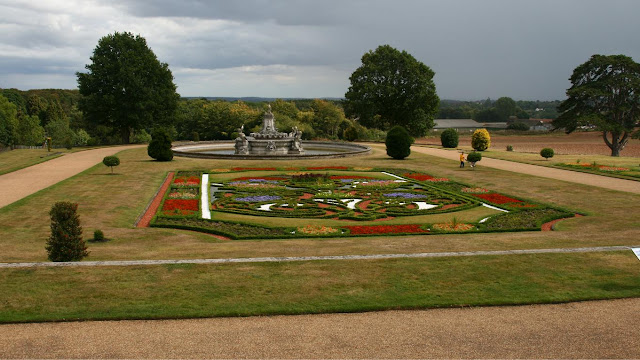
In my break for lunch, I took about three dozen cuttings of the heritage box we bought at Witley Court. It's a bit late in the season, but there you go.
Once the pulp was squeezed (yes, a cardinal sin in purist jelly making, as it won't be perfectly clear: I prefer to have ten jars of 'murky' jam, than five of clear jelly!), we added 1lb of granulated sugar to every pint of juice, and boiled it to setting point. Granulated, as the fruit is about as pectin- and acid-packed as it comes (citrus fruit and apple cores!). The result is a fruity and marmalade-like jelly, with a faint floral hint (those mischievous elderflowers that came with the oranges and lemons from the cordial), and is delicious. Thank you, River Cottage Bites.
The other thing we started yesterday was the spiced berry cordial. Having left the fruit mush to break down, I squeezed every drop of juice possible out, and added 500g of sugar for every 1kg of fruit we started with (in this case, 3kg), making 3l of liquid. We added two cinnamon sticks, 20 cloves, and 2 tsp of each of ground ginger, allspice, and nutmeg. This is brought to the boil, and simmered for five minutes. I then bottled this, hot, into warmed screw-top bottles: with the heat, and the sugar, I think it should keep just fine until Christmas.
The East Parterre at Witley Court, with box edging (© Ian (2011))
In my break for lunch, I took about three dozen cuttings of the heritage box we bought at Witley Court. It's a bit late in the season, but there you go.
Sunday, 18 September 2011
First Stages
A fairly productive weekend, mostly spent in the kitchen, preparing the first stages of several preserving recipes!
Yesterday we mixed up the ingredients for a 6lb batch of mincemeat, using the new apple crop. It's really well in advance—we made the mincemeat for this Christmas back on New Year's Eve, so the batch from this weekend will only be used Christmas 2012. As before, it's the Gary Rhodes/Delia Smith recipe, modified to go in the slow cooker for six hours (rather than a low oven for several). That happened today, after the ingredients had sat overnight, and the result is magnificent. It's filled the kitchen with Christmas spiciness whenever we stirred it. Brandy (blackberry) will be stirred in tomorrow, when it's jarred.
In a break between showers, we nipped out to planted the over-wintering alliums. About 45 'Germidour' garlic, a dozen elephant garlic, and 110-odd Summer Gold overwintering onions. Before planting them, I dug in a few trugs of compost. Alongside, we've sown a few rows of White Lisbon overwinter spring onions, in the hope of an earlier crop of scallions.
It was dry first thing today, so we quickly gathered a kilo of elderberries, to combine with blackberries, damsons, and bilberries from the freezer to make a spiced berry cordial. It's about 50% elderberries, 25% blackberries, 20% damsons, and 5% bilberries, to a total of 3kg. To make the cordial, we've made up to 4.5l with hot water, and boiled it down to 3l (that is, reduced by a third). I'm leaving it overnight, and in the morning, I'll stir in some pectolase (to break down the fruit and release the juices). Once squeezed through muslin, the juice can be sweetened and spiced, and then bottled.
We also cooked up a big bag of citrus fruit hulls, and apple peelings (tasty sounding, no?): these have been collected over several months and frozen, and include the slices of orange and lemon that went into the elderflower cordial (and a few elderflowers). Covered with water, and simmered for an hour, I'll squeeze this tomorrow as well, and then make it into jelly.
Lastly—and lately—I strained the hedgerow wine that I started a week ago. The pulp (sloe, elderberry, blackberry), in a gallon of water, has been fermenting since Monday, with the aid of pectolase and yeast nutrient, and has now been squeezed onto 1.3kg of sugar in a demi-john. Fermentation, predictably, has picked up a notch.
Yesterday we mixed up the ingredients for a 6lb batch of mincemeat, using the new apple crop. It's really well in advance—we made the mincemeat for this Christmas back on New Year's Eve, so the batch from this weekend will only be used Christmas 2012. As before, it's the Gary Rhodes/Delia Smith recipe, modified to go in the slow cooker for six hours (rather than a low oven for several). That happened today, after the ingredients had sat overnight, and the result is magnificent. It's filled the kitchen with Christmas spiciness whenever we stirred it. Brandy (blackberry) will be stirred in tomorrow, when it's jarred.
In a break between showers, we nipped out to planted the over-wintering alliums. About 45 'Germidour' garlic, a dozen elephant garlic, and 110-odd Summer Gold overwintering onions. Before planting them, I dug in a few trugs of compost. Alongside, we've sown a few rows of White Lisbon overwinter spring onions, in the hope of an earlier crop of scallions.
It was dry first thing today, so we quickly gathered a kilo of elderberries, to combine with blackberries, damsons, and bilberries from the freezer to make a spiced berry cordial. It's about 50% elderberries, 25% blackberries, 20% damsons, and 5% bilberries, to a total of 3kg. To make the cordial, we've made up to 4.5l with hot water, and boiled it down to 3l (that is, reduced by a third). I'm leaving it overnight, and in the morning, I'll stir in some pectolase (to break down the fruit and release the juices). Once squeezed through muslin, the juice can be sweetened and spiced, and then bottled.
We also cooked up a big bag of citrus fruit hulls, and apple peelings (tasty sounding, no?): these have been collected over several months and frozen, and include the slices of orange and lemon that went into the elderflower cordial (and a few elderflowers). Covered with water, and simmered for an hour, I'll squeeze this tomorrow as well, and then make it into jelly.
Lastly—and lately—I strained the hedgerow wine that I started a week ago. The pulp (sloe, elderberry, blackberry), in a gallon of water, has been fermenting since Monday, with the aid of pectolase and yeast nutrient, and has now been squeezed onto 1.3kg of sugar in a demi-john. Fermentation, predictably, has picked up a notch.
Sunday, 11 September 2011
Chutney, Jam, and Wine
Having collected the apples on Thursday, we've got on with making this year's chutney. We enjoyed the Grandma's Hot Apple Chutney we tried last year, so we did a double batch of that (12 jars). Instead of the basic apple chutney, we made a batch of the National Trust's Windfall Chutney (not with windfalls, but never mind), which was another 8 jars. A statutory batch (5 and a half jars) of mango chutney (another 850g tin of kesar mango puree!) followed; I think the spice blend worked better. We then tried a spiced elderberry chutney (cooked and sieved berries), which is extremely purple-red (5 jars). The Windfall Chutney has a couple of tablespoons of turmeric in, so that's rather yellow, making this years jars quite colourful: the Grandma's Hot is quite molasses-y, the Windfall is yellow, the mango orange, and the elderberry strongly anthocyanin!
We'll do a round of mincemeat next weekend (it requires an overnight steep of the ingredients), which will use more apples—the rest will be eaten as they are, or made into puree for cooking or eating.
One of our neighbours was given a large quantity of greengages, which were surplus to her requirements, so she gave us a few kilos. As a result, we've tried a new recipe, for greengage and almond jam. The greengages defrosted brown (they went in green), but it doesn't appear to have mattered. They also didn't require stoning before cooking, contrary to some instructions—though that did mean Liz had to keep vigilant watch for stones while to cooked, fishing them out as they floated. It's very tasty, and reminiscent of a marvellous gooseberry jam we made some years ago. Not too sweet, with a good 'plum' flavour.
To round off the preserving weekend, I started a batch of Hedgerow Port: elderberry, sloe, and blackberry wine. Nothing unusual: 800g blackberries, 300g sloes, and 400g elderberries, crushed, with 4.5l of boiling water poured over them. I added some pectolase once it'd cooled a bit, and yeast will go in tomorrow. The must'll ferment for four-five days, and then I'll strain it onto sugar in a demi-john.
The elderflower and elder rosé wines look like they've slowed considerably, so fermentation may be nearly complete. I'll probably leave them for another few weeks, then rack them.
We'll do a round of mincemeat next weekend (it requires an overnight steep of the ingredients), which will use more apples—the rest will be eaten as they are, or made into puree for cooking or eating.
One of our neighbours was given a large quantity of greengages, which were surplus to her requirements, so she gave us a few kilos. As a result, we've tried a new recipe, for greengage and almond jam. The greengages defrosted brown (they went in green), but it doesn't appear to have mattered. They also didn't require stoning before cooking, contrary to some instructions—though that did mean Liz had to keep vigilant watch for stones while to cooked, fishing them out as they floated. It's very tasty, and reminiscent of a marvellous gooseberry jam we made some years ago. Not too sweet, with a good 'plum' flavour.
To round off the preserving weekend, I started a batch of Hedgerow Port: elderberry, sloe, and blackberry wine. Nothing unusual: 800g blackberries, 300g sloes, and 400g elderberries, crushed, with 4.5l of boiling water poured over them. I added some pectolase once it'd cooled a bit, and yeast will go in tomorrow. The must'll ferment for four-five days, and then I'll strain it onto sugar in a demi-john.
The elderflower and elder rosé wines look like they've slowed considerably, so fermentation may be nearly complete. I'll probably leave them for another few weeks, then rack them.
Thursday, 8 September 2011
Apple Harvest
It's a bit earlier than last year, but we picked the apples from the hillside. I think it comes to about eight big shopping bags full, which should be plenty for the recipes we've got planned. Making chutney is planned for the weekend; we might do some jam at the same time. It's that time of the year when there's loads of freezing, preserving, and bottling!
Tuesday, 30 August 2011
Damsons
We spent this morning topping up half of the strawberry bed with more topsoil: it's now ready for planting. The other half wants topping up with compost/manure, as it'll receive rhubarb crowns (which want lots and lots of organic matter), but that will wait.
In addition to another pair of cauliflowers, and a handful of courgettes, we also picked the first of our runner beans, and lifted the first celeriac. The celeriac's a little small, really, but made a very tasty soup for lunch.
Anticipating making the flower beds in the sheltered corner of the garden, we dug a hole (slightly randomly positioned) in that corner, to assess the ground. Not good. There's about 25cm of good topsoil, but below that is hardpan clay. This was somewhat expected, as the ground gets wet during autumn and winter, but it's probably worse than I thought. It probably means we'll have to bring in new soil, and may have to install some drainage aids.
Better, though, was our discovery during an afternoon walk of a damson tree: we now have a big tub of damsons, and the same of blackberries—the first of the autumn. We reckon that the apples are nearly ready, so we might have a weekend of chutney and jam in ten days time.
In addition to another pair of cauliflowers, and a handful of courgettes, we also picked the first of our runner beans, and lifted the first celeriac. The celeriac's a little small, really, but made a very tasty soup for lunch.
Anticipating making the flower beds in the sheltered corner of the garden, we dug a hole (slightly randomly positioned) in that corner, to assess the ground. Not good. There's about 25cm of good topsoil, but below that is hardpan clay. This was somewhat expected, as the ground gets wet during autumn and winter, but it's probably worse than I thought. It probably means we'll have to bring in new soil, and may have to install some drainage aids.
Better, though, was our discovery during an afternoon walk of a damson tree: we now have a big tub of damsons, and the same of blackberries—the first of the autumn. We reckon that the apples are nearly ready, so we might have a weekend of chutney and jam in ten days time.
Sunday, 3 July 2011
Summer House Party
We hosted a repeat of the post-Christmas get-together this weekend, with the same friends travelling up on Friday, and staying until today. Sadly, Katherine was struck down by a stomach bug, and couldn't make it, but Robert joined us this time (he couldn't make it in January). As before, much food was consumed and eaten, and we also enjoyed games of croquet and boules outside (the glorious weather held), and Twaddle and Chinese Chequers inside, as well as a walk on Saturday.
Everyone had left by early afternoon, and we've made the most of the last bit of holiday. A bit of tidying in the kitchen garden yielded a few trays of currants, and a kilo of strawberries, as well as a half-dozen carrots and a bowl of sugar-snap-size peas (they're not a mange tout/sugar snap variety, but we're eating them as such). We then popped out to collect a dozen heads of elderflowers, and set an experimental bucket of wine going: elder rosé. This is something I thought up last autumn and wanted to try, but have had to wait for the elderflowers, having frozen the elderberries I needed. My thinking is that a rosé based on the elderflower and elderberry wine would be interesting, as I find the latter has too much tannin, but the former has, naturally, none.
So, I halved both recipes, and combined them. We'll see what happens.
With the kilo of strawberries, we've tried making an elderflower and strawberry jam. Hazel made jars of this (and about six other jams) as favours at her wedding. It's a nice change from straight-up strawberry jam: hers was a little less sweet, and the floral addition worked really well. It seems to have set well, which I'm really pleased about: hopefully it will also taste good.
Everyone had left by early afternoon, and we've made the most of the last bit of holiday. A bit of tidying in the kitchen garden yielded a few trays of currants, and a kilo of strawberries, as well as a half-dozen carrots and a bowl of sugar-snap-size peas (they're not a mange tout/sugar snap variety, but we're eating them as such). We then popped out to collect a dozen heads of elderflowers, and set an experimental bucket of wine going: elder rosé. This is something I thought up last autumn and wanted to try, but have had to wait for the elderflowers, having frozen the elderberries I needed. My thinking is that a rosé based on the elderflower and elderberry wine would be interesting, as I find the latter has too much tannin, but the former has, naturally, none.
So, I halved both recipes, and combined them. We'll see what happens.
With the kilo of strawberries, we've tried making an elderflower and strawberry jam. Hazel made jars of this (and about six other jams) as favours at her wedding. It's a nice change from straight-up strawberry jam: hers was a little less sweet, and the floral addition worked really well. It seems to have set well, which I'm really pleased about: hopefully it will also taste good.
Thursday, 7 October 2010
Plumbing and Wiring
I took today off 'work', and got on with some bits of the kitchen. The sinks now drain into the drain (rather than into the cupboard), and the taps are connected to the water supply. Plumbing and wiring the water heater in was a little more involved. The heater's a 9.5kW beauty, and—therefore—requires a fairly beefy cable. This was a little tricky to manipulate into position, but is now sorted. There was also fun and games with plumbing; it's further than I thought from the taps to the water inlet, but I got there in the end. (The 'idiot proof' push-fit fittings also leaked, which was irritating: I have replaced them with compression fittings.)
Having shuffled the cooker out of the way, I also installed the extractor above it: this is a bit louder than I expected, unfortunately, although it's also rather effective. We'll see how much use it gets, given the former characteristic. The fridge is now back in place, as the electrician finished his work yesterday, and chilling.
Lastly, I started filling the gaps in the beams: two of these (they're solely decorative) had extra lengths added because the ceiling has got longer in their direction. I'll need to do a little more filling, and then they can get stained to the same dark finish as the existing lengths.
Tell a lie—lastly was actually oiling the worktop again.
Having squandered a lovely day inside, I then nipped out and cut a bucket of elderberries, which I've frozen. With a little luck, I can make some wine/chutney/jam over the weekend.
After a long day, it was a pleasure to cook on the new cooker, and even more fun to wash up: the new sinks are just the right size (as well as looking good), and it was something I've missed for the last 14 months; being able to turn the hot tap on, and get the sink filled with hot water. The heater seems to work just fine!
Having shuffled the cooker out of the way, I also installed the extractor above it: this is a bit louder than I expected, unfortunately, although it's also rather effective. We'll see how much use it gets, given the former characteristic. The fridge is now back in place, as the electrician finished his work yesterday, and chilling.
Lastly, I started filling the gaps in the beams: two of these (they're solely decorative) had extra lengths added because the ceiling has got longer in their direction. I'll need to do a little more filling, and then they can get stained to the same dark finish as the existing lengths.
Tell a lie—lastly was actually oiling the worktop again.
Having squandered a lovely day inside, I then nipped out and cut a bucket of elderberries, which I've frozen. With a little luck, I can make some wine/chutney/jam over the weekend.
After a long day, it was a pleasure to cook on the new cooker, and even more fun to wash up: the new sinks are just the right size (as well as looking good), and it was something I've missed for the last 14 months; being able to turn the hot tap on, and get the sink filled with hot water. The heater seems to work just fine!
Sunday, 15 August 2010
Clearing the Cotoneaster
When the garden was claimed from the hillside (when the cottages were converted, about thirty years ago), a mainstay of the planting was a number of cotoneaster. I have no idea which variety, but the leaves are a mid-gloss green, fairly small, and the berries are red and about 5mm diameter. It is entirely undistinguished. I have nothing, in principle, against cotoneaster: the berries are very good for birds, and the flowers produce nectar that's invaluable for bees during the June Gap.
However, it's really not that interesting, and there is far, far too much of it. As in, around 50m2. Removing most/all of it has long been the intention, and we've finally got started. We cleared a big gorse last September, with my mum's help, and—once again—she helped with the cotoneaster. The target was the patch at the end of the upper long bed, on the eastern end. We've certainly not eliminated it, but we've cleared probably 4–5m2, which is a nice start, and it's uncovered a rhododendron and conifer that were buried. The area will need clearing of roots, and we'll probably replant it with herbaceous perennials. They won't necessarily remain there, but it'll be something to fill the ground with, and they can get growing (a tactic of frugality: buy 'em small and cheap, and grow them on, as we have plenty of space).
It's nearly time for the autumn orders to go off. I'm hoping to get in a load of spring bulbs (daffodils, of course, and more puschkinia and squills), some perennials, and replacement raspberries and blackcurrants. If the weather's acceptable, we also hope to get started on the raised vegetable beds. They've been on hold for some time, but I want to get them finished before winter. Of course, we still need to finish the raspberry beds' netting!
The local blackberries are nearly coming into ripeness, which means jam & winemaking can't be far off.
However, it's really not that interesting, and there is far, far too much of it. As in, around 50m2. Removing most/all of it has long been the intention, and we've finally got started. We cleared a big gorse last September, with my mum's help, and—once again—she helped with the cotoneaster. The target was the patch at the end of the upper long bed, on the eastern end. We've certainly not eliminated it, but we've cleared probably 4–5m2, which is a nice start, and it's uncovered a rhododendron and conifer that were buried. The area will need clearing of roots, and we'll probably replant it with herbaceous perennials. They won't necessarily remain there, but it'll be something to fill the ground with, and they can get growing (a tactic of frugality: buy 'em small and cheap, and grow them on, as we have plenty of space).
It's nearly time for the autumn orders to go off. I'm hoping to get in a load of spring bulbs (daffodils, of course, and more puschkinia and squills), some perennials, and replacement raspberries and blackcurrants. If the weather's acceptable, we also hope to get started on the raised vegetable beds. They've been on hold for some time, but I want to get them finished before winter. Of course, we still need to finish the raspberry beds' netting!
The local blackberries are nearly coming into ripeness, which means jam & winemaking can't be far off.
Monday, 2 November 2009
Gladioli
Checked over the gladioli tonight: only four had discernible flower stems, two of which were spent (and thus were removed), and I brought the other two in. Having checked, it appears that it's not necessary for the leaves to die back before lifting them (although it might be preferable, I suppose): the usual criterion is to wait 6-8 weeks after flowering. As most of them appear to be blind this year, that doesn't help overmuch. While---if in the ground---they'd tolerate a frost, as they're in pots the frost might freeze the soil too much, which wouldn't be good. I think I might lift them this coming weekend, and get them stored for the winter. It isn't expected to get too cold this week (though it's very wet), so they should be fine waiting.
Strained off the rosehip juice that was prepared yesterday, too, which is looking tasty. It's been frozen for the time being: it'll probably be made into apple & rosehip jelly nearer Christmas.
Strained off the rosehip juice that was prepared yesterday, too, which is looking tasty. It's been frozen for the time being: it'll probably be made into apple & rosehip jelly nearer Christmas.
Sunday, 1 November 2009
Pie, Wine and Jams
The weather, as expected, broke last night: we've now got horizontal rain and much lower temperatures. No bed digging! Instead, we (well, actually, Liz) turned the contents of yesterday's Pumpkin Cat into pie. Much more successful than last year, attributed to microwaving the pumpkin first, and adding the spices last. Apparently. Whatever the cause, it's extremely tasty.
While she did that, I topped up the blackberry & elderberry wine that's fermenting: it was a little energetic when first mixed, and the airlock's been a bit gungy. I added water to top off the demi-john, and cleaned up the airlock. It's smelling good, and starting to clear. It's much more red than the blackberry that's next to it (which is very dark), which is to be expected. Still bubbling gently. I also sorted out some previous batches of jam (variants of blackberry, elderberry, and apple) which needed re-bottling (issues with sealing). Having done that, we realized that we still had some rosehips that needed a destiny, so they were topped, tailed, chopped and cooked, and are now dripping juice into a jug.
I must also confess a moment (well, several moments) of weakness, which led to ordering more goodies. Some narcissi 'Cheerfulness' (pale yellow, double cup: Liz was rather taken by them), quite a few Puschkinia libanotica (reminiscent of a hyacinth: white with blue streaks, which I think will go rather nicely with the S. siberica), mixed Anemone blanda, some Camassia esculenta (blue sprays of flowers on longish stems), some botanical tulips, and some assorted alliums (variety of colours, all small). Lastly, a dozen Christmas Roses (H. niger) for marking the first cat grave.
While she did that, I topped up the blackberry & elderberry wine that's fermenting: it was a little energetic when first mixed, and the airlock's been a bit gungy. I added water to top off the demi-john, and cleaned up the airlock. It's smelling good, and starting to clear. It's much more red than the blackberry that's next to it (which is very dark), which is to be expected. Still bubbling gently. I also sorted out some previous batches of jam (variants of blackberry, elderberry, and apple) which needed re-bottling (issues with sealing). Having done that, we realized that we still had some rosehips that needed a destiny, so they were topped, tailed, chopped and cooked, and are now dripping juice into a jug.
I must also confess a moment (well, several moments) of weakness, which led to ordering more goodies. Some narcissi 'Cheerfulness' (pale yellow, double cup: Liz was rather taken by them), quite a few Puschkinia libanotica (reminiscent of a hyacinth: white with blue streaks, which I think will go rather nicely with the S. siberica), mixed Anemone blanda, some Camassia esculenta (blue sprays of flowers on longish stems), some botanical tulips, and some assorted alliums (variety of colours, all small). Lastly, a dozen Christmas Roses (H. niger) for marking the first cat grave.
Subscribe to:
Posts (Atom)



