Showing posts with label trees. Show all posts

Wednesday, 9 November 2016

Snow

It's only been a week since the first frost of the winter, and now it's snowing.


The Herb Garden (&copy Ian 2016)


The Orchard (© Ian 2016)


The house in the snow (© Ian 2016)

When I commented on the colour being ephemeral, I didn't think we'd only have ten days more of it—but you'll see the Virginia Creeper is bare, and the acers have lost most of their leaves, too.

Wednesday, 26 October 2016

Autumn Cut

After cutting the paths in the orchard, the verges, and the copse ten days ago, we spent a few hours this morning starting to tackle the longer grass of the orchard. This needs the solid blade on Sigrid, rather than the strimmer head, because the grass, thistles, brambles, ragwort and blackthorn is rather too tough for a nylon string. We managed to do just less than a third of the job (equating to most of the left-hand area delineated by hedge and path), and get the cut material raked up and heaped at the compost bins. That was limited by my only having half a day at home (I'm effectively working a late shift), and also by our stamina: Sigrid isn't light, or quiet, or sweet-smelling!

However, even though it's going to take another couple of stints of work, hopefully over the coming weekend, the bit that we've done does look a lot better. It's nice to have it neat going into the winter, and cutting the grass back regularly does reduce the formation of tussocks, which makes it very much less even underfoot.

Sunday, 22 February 2015

Mulch Preparation

We've got a load of mulch arriving this week, ready to spread on the beds. That means that the first weeding of the year is now urgent, because the mulch does an excellent job of reducing new seedlings, but just gives existing weeds a boost, which isn't quite what we want. As well as weeding, we've also pruned the apples and pears on the hillside, tying in the slow winter growth in the apple walk as we go; pruned the fruit bushes; and admired the emerging snowdrops.

We also potted up ten new hellebores that arrived this week, which are now in the front garden growing on; six Chocolate Cosmos; and the 20-odd tender yellow things I can never remember the name of. Argyranthemum/margeurites, possibly. We take cuttings of them each autumn to over-winter, and they're out-growing their modules, now.

The other thing we managed was to tie together the willow growing down the sides of the septic tank, to start forming the arched tunnel over the mini-sheds. There's some way to go, admittedly, but you finally get an idea of what it will eventually achieve, which is nice.

Thursday, 6 November 2014

Compost Turning

I've had a day off today, getting a few bits done around the house while Liz works from the sitting room. It's been a useful one, with reasonable weather, too, and we finished the day with a trip to our local garden centre's Christmas preview evening (with 15% discount on everything...irresistible).

A lot of this morning I spent getting the plumbing and worktop in our bathroom sorted, and now the sink is properly connected, and the worktop is in place, attached, and sealed. This is rather necessary, as the plan is to dismantle the pink (house) bathroom at the weekend, so we wanted a working toilet and basin, even though we'll be using the guest en suite for showering for a while yet (until we can tile ours).

I've trimmed the old hollow-core back door, ready to re-use in the doorway between the master en suite and the new guest room. For now, it's just secured in the frame: the existing wall prevents it opening, so (as I can't, therefore, get to the hinges) it can't be screwed to the frame until the wall's taken down.

I've finally got round to labelling the plants we bought at Tatton in July, before they die back and vanish for the winter—unfortunately, I've lost track of a eupatorium, and the two echinaceas ('Secret Love'), so I'll have to hunt again for them.

Over lunch, we set soaking the dried fruit for our Christmas cake, which we'll make at the weekend. It has loads of dried fruit, nearly three pounds, which we soak with a mug or so of tea for a few days.

Before dusk fell, I managed to turn the compost heaps, thus freeing up (kind of) the first bay, which promptly half-filled with the mound we'd formed nearby. It has let me empty the bin outside the kitchen, though, which is good. Hopefully the space will suffice until spring, when we'll start needing compost again, thus emptying the third bay, and creating trickle-down space in the system.

I also managed to knock a long-standing job off The List, and cleared a silted up corner of the drive, and the drainage channel between it and the track, so the drive will, hopefully, flood less badly this winter.

This evening's shopping trip was good, with a few Christmas decorations, including a long string of lights for the acer in the front garden, and a half-priced holly (the variegated form, 'Silver Queen'), which will go on the hillside, to complement the pure green hollies already well established.

Thursday, 25 September 2014

Autumn Cut

We've enjoyed the wildflowers in the orchard this summer, which is one reason why I've left large swathes of it uncut for some time, only clearing paths through it. However, as autumn enters, I've now gone over the entire orchard, cutting it back as close as I can, so that it stays neat, and walkable, over the winter. Heavy work, even in the milder temperature, but it actually only took about three hours, which isn't bad. It looks a lot neater, even with the strewn vegetation.

Before doing that, though, this morning I've painted the arches of the apple walk, coating the steel rebar with cream-coloured metal paint. The arches now really stand out, and will stand the weather much better.

I've planted out the autumn-planting onions (100 Radar) and garlic (30-odd Marco) in the herb garden, through weed-proof membrane.

Last thing, I managed (just, before the light faded and drizzle set in) to mow the lawn. I managed to do the games lawn a while ago, but it's been some time since the rest has been done, and it really needed it. Hopefully, as the weather cools and the days shorten, it'll be a while until I have to do it again. I am hoping to manage to keep trimming it through the winter, weather permitting, this year. I do still need to take the brushcutter to the copse, though, and tidy the verges of the lane, so my grass-cutting isn't over for the year...

Wednesday, 17 September 2014

Apple Harvest

It's not been a good year, at all, for apples—the fruit, at least: the apple trees have all grown well, especially the apple walk, which despite only going in at the end of last winter, have established extremely quickly. We spent half an hour yesterday tying in the last of this season's growth, and several will be ready to be cut back to their third tier in January.

Fruit yield, though, has been rather poor. I've collected everything this evening, while Liz picked blackberries, and we've only got a couple of crates full. The best have come from the two established trees right on the left of the orchard. The taste and texture are good, and they're a decent size, it's just there aren't very many. Never mind: we also had about eight fruit off the James Grieve and Falstaff (planted February 2013), which are very attractive, and taste great.

Tuesday, 19 August 2014

Late Summer Flowers

After weeks of sweetpea arrangements, they're starting to come to an end, and so this week's centrepiece arrangement is a bit different (apologies for the shaky photo).


Golden rod, achillea, echinacea, grasses, and lysimachia in this week's flower arrangement (© Ian 2014)

We went up on the hillside, too, and it's very pleasing how the apple walk and graftlings are coming on. The apple walk's structure is a lot clearer than I thought it would be, in its first year, and the shoots need tying in again. In the graft bed, I'm delighted that we seem to have three viable Hessle pears, two each of the apples, Crimson Superb and Craggy's Seedling (a third, of each, is in the walk, grafted directly). There's only one of each of quinces Ivan and Vranja, and medlar Dutch, which is, admittedly, all we needed to make the effort a success. Sadly, the medlar Royal didn't take, in any of the three attempts, but there you go. I make that a 12 out of 21 success rate, for my first grafting attempts.

Tonight, we potted on three giant scabious, a load of Lysimachia ephemera, and a tray of Hidcote lavenders; all seed-grown, the first and last from the RHS. That's freed up a couple of module trays for some perennial plugs that will arrive soon.

Wednesday, 16 July 2014

Apple Walk Arches

Earlier this year, we planted the twenty-two trees of the apple walk, each one next to a tube that formed the base of an archway. In time, each tree will be trained up the arch (with horizontal espaliers on one side), forming a living arched walk. Of course, we're some time off that point; but several of the trees have grown strongly this year, and have reached to the top of the steel tube already (about 1m). That's meant that I've had to get round to adding the arches themselves, in order to have something to continue tying apple growth on to—and that's been today's work.

I ordered a number of 6m length, 10mm diameter reinforcing bars (rebar) some months ago, and they've sat outside the kitchen waiting since then. I constructed a bending jig out of timber, and used this to help shape the arches. Each one is a semicircle of 2.4m diameter, with straight legs around 90cm long (I had to trim kinked ends off the rebar, so they're not identical). These are then slotted into the tubes, and fixed using three A4 M5 bolts at the right height. Before they went in, I painted the straight sections: painting the rest will be another day's work, in the next couple of months).

Once they were all in, I've added a horizontal rod at the level of the third espalier tier (1.2m height), and one along the apex of the arches. I still have 4½ rebars left, which will probably all be needed in diagonal braces between arches (to stop them leaning over as one). Again, that's another day's work: bending 11 arches by hand is quite enough effort for one hot July day.

I did, however, prune and tie in the new apple growth: they're doing very well. All but a couple have the first tier well formed (Hunt House took a long time coming into growth, and is rather behind); many have a second tier tied down and growing out; a couple (Cat's Head and Grandpa Buxton) even have a third tier started, and one or two more will get there this year). I've had to order more soft-tie wire!

Elsewhere: the sweet peas keep coming.


This week's sweet pea centrepiece (© Ian 2014)

Sunday, 18 May 2014

Sweet Peas

We finished constructing the climbing frames for the sweet peas over Thursday and Friday evening; working together, it takes about an hour to willow each one. Yesterday morning I dug holes into which they could be sunk, and positioned them in the bed. The soil's stonier than ideal, really, there, so this was slow progress, but eventually all four were suitably sunk into the ground. We then planted out the sweet peas, about a dozen plants per pyramid, with two or three varieties per support (hopefully complementary colours!). The plants have grown on really well in the greenhouse, so they're bigger than they've been in previous years, which is encouraging. It's also freed up some valuable bench space in the greenhouse, which is good because we discovered that we've got a couple of dozen packs of flower seeds to plant. I moved the tomatoes into the greenhouse, from the sitting room window: they'll need potting on soon. All in all, we need to get things moved out of the greenhouse shortly: fortunately there are a number of pots that can be planted out into the vegetable bed (beetroot, Swiss chard, brassicas), which will help, and a lot of lavender that can go out. A few pots, of dahlias, tulbaghia, and agapanthus, need to wait until we're sure there won't be frosts (probably a week or so).

Sunday was spent putting a third of the new garage floor down. The sealant paint went down over a number of evenings, the last on Friday. Onto this we've laid a high-tech multifoil insulation. The battens on top of this have solid foam boards between them, and then a plywood layer on top. That makes a very well insulated layer, but only takes 65mm of height. Tomorrow we'll move things off the next section of floor, ready to paint that, and lay the floor in a week or so.

Barely, we managed to get that sorted with enough time to mow the lawn (a mixed blessing), which does admittedly look a lot better for it. Liz has also managed to weed the entire long border in gaps in the flooring work, which is now looking magnificent.

I reckon that the quince will be in flower in the next 48 hours...and I can't wait.

Wednesday, 7 May 2014

Above Ground

I've had a day at home, starting work on the long-planned permanent support frames for the sweet peas, and vegetable climbers, as well as being around to receive a number of garage-related deliveries.

While in the garden though, I've been delighted to see that the quince is, finally, going to flower this year. The cherries and plums are already doing so (not brilliantly, in the latter's case), and the apples, in the garden and orchard, are on the cusp.

In the vegetable garden, many of the potatoes now have shoots above ground, and a large fraction of the onions have shoots. That's a lot faster than in previous years, for both, which I credit with the later planting, and—therefore—warmer ground.

Monday, 5 May 2014

Scarborough

Making the most of the bank holiday weekend, we've had a couple of days in Scarborough, with Liz's grandparents, and a day in Thirsk with my parents. It's the first time I've been to Scarborough in twenty years, and about a dozen since Liz last went, so we were both really seeing it through fresh eyes.

On Saturday, after lunch, we walked down Woodland Ravine, through Peasholm Park, and along the north bay, before turning back past the open air theatre to return.


Spring colour in Woodland Ravine / Dean Road Cemetary (© Ian 2014)


Spring colour in Woodland Ravine / Dean Road Cemetary (© Ian 2014)


Peasholm Park (© Ian 2014)


Peasholm Park (© Ian 2014)


Wildflowers: primroses, wood anemones, and forget-me-nots in Peasholm Park (© Ian 2014)


North Bay and Scarborough Castle (© Ian 2014)


Squirrel Sculpture, Peasholm Park (© Ian 2014)


Peasholm Park (© Ian 2014)

Faux-Oriental sculpture, Peasholm Park (© Ian 2014)


The Secret Garden (© Ian 2014)


The Secret Garden (© Ian 2014)

Although Sunday morning was a bit overcast, we started at Anne Brontë's grave, before walking around Scarborough Castle. From there, we went down the side of the headland, across the harbour, and along the seafront. After going past the Spa, we came up through the gardens to meet our lift.


Ruins of North Transept in churchyard of St Mary's with Holy Apostles, destroyed in Civil War (© Ian 2014)


The Keep, Scarborough Castle (© Ian 2014)


Roman Signalling Station, Scarborough Castle (© Ian 2014)

The Keep, Scarborough Castle (© Ian 2014)

View from Scarborough Castle over North Bay (© Ian 2014)

Sunday afternoon comprised a walk through Raincliff Wood, which has a large number of paths (thank you, Woodland Trust), and an interesting bit of woodland regeneration in Raincliff Meadow.


Wood Sorrel (© Ian 2014)


Bluebells (© Ian 2014)


Woodland Flowers (© Ian 2014)


Wood Anemones (© Ian 2014)


Stumps, Raincliff Wood (© Ian 2014)


Tree roots over outcrop (© Ian 2014)

Friday, 18 April 2014

Good Friday

A few photos taken this evening. Some are just for our records, of gaps in the bulb planting that we can fill in the autumn.


Acer coming into leaf (© Ian 2014)


A record for planting in the autumn: gaps in the bulbs in the sweet pea beds (© Ian 2014)


The Quince/Heuchera Bed (© Ian 2014)


The Front Copse Bed (© Ian 2014)


Front Copse Bed (© Ian 2014)


Looking Up The Copse (© Ian 2014)


White Lion Daffodil (© Ian 2014)


Gaps for bulbs in the copse bed (© Ian 2014)


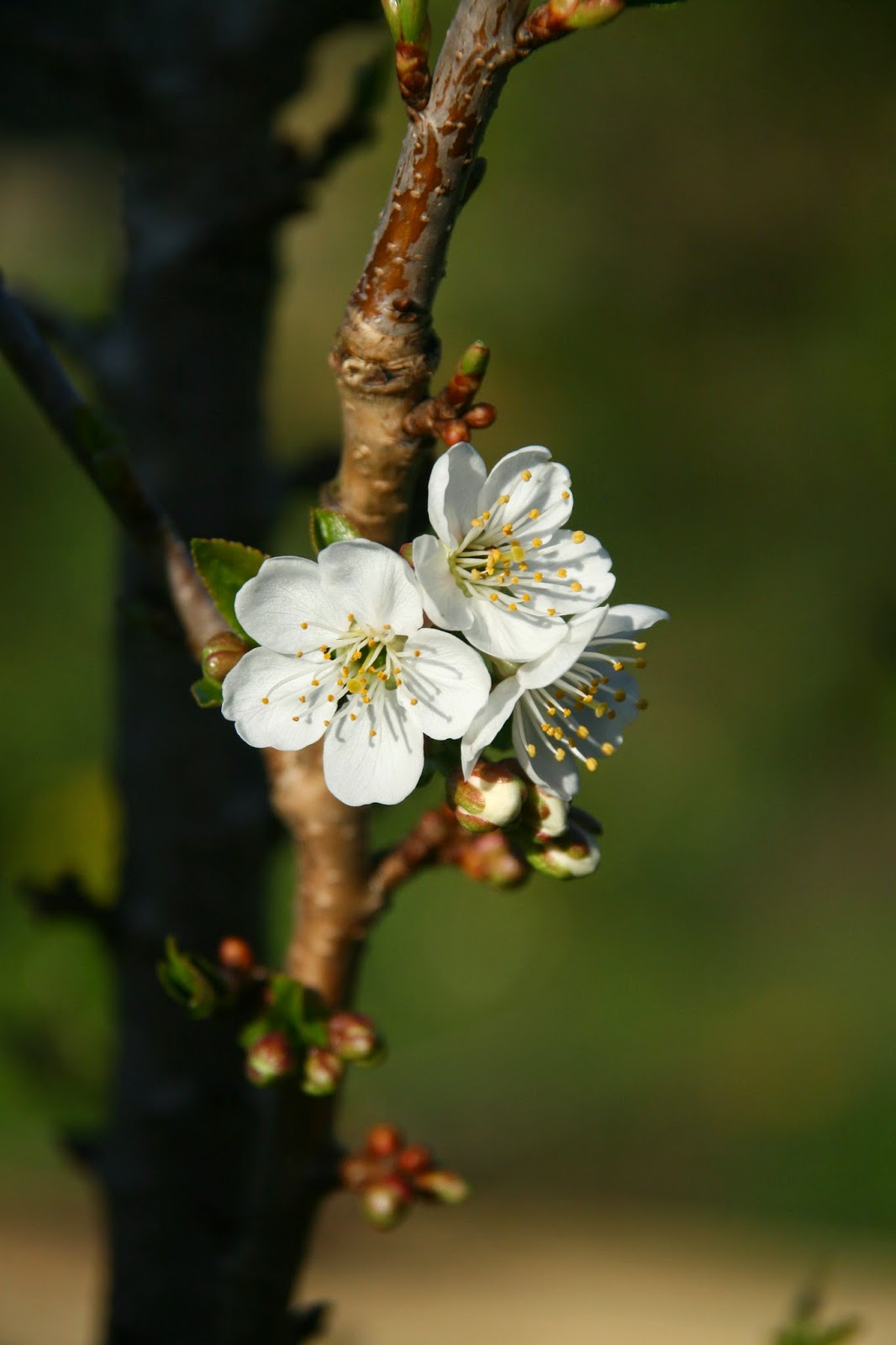
Cherry blossom ( Ian 2014)


Pulsatilla in long bed (© Ian 2014)


Primroses (© Ian 2014)


More double daffodils (© Ian 2014)


The long border: gaps for spring bulbs (© Ian 2014)

Sunday, 6 April 2014

Orchard Enlargement

We've already spent two days hard at work, clearing blackthorn from the back of the orchard and burning it, but the progress we made was largely invisible from the house, as we were working from the back (top) of the bank of blackthorn, effectively hollowing it out. Yesterday, though, we finished the job, and the whole cleared area became visible in one day. It's a space probably ten metres deep, and fifteen wide, and means that the established apple tree in the back left, and the chestnut we planted on that side in February, are both now 'in' the orchard, rather than feeling separate. The James Grieve apple, and the other established apple that were on the back edge of the orchard now have space behind them or the left of them (respectively). We haven't yet gone as far right as the other chestnut: this will create less additional space, but we'll try to do so in the autumn.

The big advantage is that this has cleared the space that one day will hold the plum arch, which will be the feature exit from the back of the orchard into the clearings and woodland above. We've marked our intended position for it with a pair of fence posts, which—now they're visible—will let us assess whether it's in the right place. Pleasingly, it's directly above the hole in the dry stone wall that I'm rebuilding (slowly), which in turn is directly opposite the old door in the dining room (long (decades) since replaced with a window).

We were also able to pop out this morning to plant the second mulberry, King James/Chelsea, which has been in a pot since autumn, waiting to go in the ground. The weather also held just long enough to plant three more hellebores in the copse bed, three primulas in the games lawn's septic tank bed, a sedum 'Thundercloud' in the long border, and a handful of thymes and sedums in the wall in the front garden.

Oh; a note to myself: we saw a rather attractive hydrangea, 'Zorro', which might one day have a place.

Sunday, 30 March 2014

Blackthorn

Three weeks ago, we started clearing the swathe of blackthorn (sloe bush) that forms the back of the orchard. It's about 30' thick, in places, in front of a number of quite old and established trees. They're quite attractive, and the blackthorn's rather scrubby, dark, unproductive, and thorny. We've long intended to clear them, and increase the size of the orchard (our 'Chelsea' mulberry is waiting in its pot until we've cleared its space), as well as expose the more attractive treeline. There'll probably be some spaces, up against the trees, where we can plant small trees or shrubs, to get a transition from the more open orchard into the woodland.

First, though, the blackthorn needs to come down. We light a bonfire on the same spot as before, and I dragged brush to it while Liz worked on cutting down and disentangling the blackthorn. We're now probably two-thirds of the way through it, and progress is now visible from the orchard side of the bank: last time we worked from above, and were hollowing out of the stand. This time we broke through, and the chestnut that was hidden in a bight in the blackthorn has now been linked to the orchard properly. The solitary established apple tree that was separated from the others by blackthorn is now connected to the rest, too.

The fire was a bit tricky to get burning properly, but once it was going, a real depth of charcoal built up, and was so hot that anything thrown on rapidly ignited. We came in at about half-six, scratched and weary, but the mound of embers was still glowing brightly in the dark, when I went to check on it four hours later.

Wednesday, 26 March 2014

New Beds

Last time we were out in the garden (ten days ago: David and Ann were with us for the weekend, which was a relaxing couple of days filled with food, and no work), I dug a new bed above the beech bench, and we planted a row of lavenders around its edge. Today, it was the turn of the other side, and we now have a matching bed below the bench (between it and the steps down to the wood shelter and kitchen garden). While I dug it over, Liz cleared a heap of shredding that's been accumulating, and we were, as ever, amazed at how small the resulting pile of chipped stuff is.

Having removed a load of stones (as normal), the remaining ground is actually rather nice soil: we planted a row of lavender around it, again, and then filled the space in both beds with other things that were taking up space in the greenhouse: a few dozen deschampsia grasses (D. cespitosa), some sweet rocket (Hesperis matronalis), and some Jacob's ladder (Polemonium): all grown from RHS seed last year.

At the left end of the bed, there's a space towards the wall where we took down the conifer a couple of years ago, which was obscured by the aforementioned shredding heap. This was the destination of the Persian Ironwood (Parrotia persica) which arrived last December, and has remained in its pot over the winter. The space now cleared, we've been able to plant that out, and hopefully it'll add some year-round foliage interest to that corner.

Part of the reason for preparing and planting these beds was to free up small pots and space in the greenhouse. That achieved, we spent the last hour of the day potting up a load of sweet peas (again, no 'Apple Blossom' have germinated: they're on the black-list, now), chilli and sweet peppers, and aubergines. In turn, that meant space in the propagators, so we've also sown more cosmos (an orange mix), tiger tomato seeds collected last year, anise, and a few other ornamentals. Even with the greenhouse, we're still going to wind up with lots of pots on the windowsills: but at least they'll be gone by May this time, and the tender veg (tomatoes, peppers, and aubergines) won't be inside, but out in the greenhouse.

Sunday, 16 March 2014

Mulch

A fair bit of the weekend's been spent dealing with the 6m3 of mulch that arrived on Thursday. After putting a good layer on the vegetable garden then, on Saturday we worked along the fruit beds, giving the currants and berries a thick mat. We spared a bit for the rhubarb, too, which I've already spread several trugs of compost onto, but more is definitely better for this hungry perennial. I think we'll take our first harvest next weekend: the oldest Timperley Early is doing well (and is earliest!).

The fruit beds will get a weed-suppressing layer of cardboard, and then a topping of chippings, when we next have some: this reduces the weeding so much that it only needs an annual blitz (my job yesterday), which is much better.

We've also gone along the fruit trees on the hillside (excluding the apple walk, and the pear 'Hessle', as they're too small to need it), putting a trug full of mulch under each one's anti-weed membrane. The ornamental plums are on the verge of coming into leaf and flowering.

The heuchera/quince bed is a little too full of rather dainty spring bulbs to want to mulch it (should have done so in January or February!), so we've filled two Dalek-style composters with mulch, on a nearby path, ready to spread once the bulbs die back. Lesson learnt for 2015.

That still left us with a good heap of mulch, so the last job today was spreading twenty-odd trugs over the long border. This bank is reasonably fertile, having had cotoneaster leaves dropping on it annually for twenty years, but it could still do with building up. Liz had been weeding the bank over Thursday, Saturday, and today, so the mulch has gone (as it should) straight onto clear ground, and it looks really good.

While she weeded, I've tidied the over-grown grass in the wild-er bit near the flowering currant and behind the copse bed. I should, really, have strimmed this in late autumn, as it's now full of daffodils, which obviously I don't want to damage. This made it a manual job, which is more tedious, but there you go.

Last short job yesterday was digging an exploratory trench to work out the fate of the land drain we uncovered when preparing the bed for the sweetpeas last spring. We've gone about two metres up-hill, on the other side of the path (which I didn't want to disturb just yet), and found two breaks in the pipe -- but no herringbone joint yet. I'm still hoping that we'll find some: there's no chance it's draining the whole section of garden unless there's either herringbone drains running off from it, or a second drain (hitherto undiscovered) further along. That said, the broken sections, which have filled with organic debris, would explain why they're not working. It's going to take a bit more work to get to the bottom of it all.

This afternoon, my digging was on the opposite side of the garden, as I was preparing what will become beds in front/beside the beech bench. I've cleared the turf from both, but only dug over the bed above the bench (very stony and laborious). The soil's quite nice, actually, once the stones are prised out. Fortunately, one bed was enough to plant 28 lavenders out, as a border, which has freed up enough 2½–3" pots to pot up the 'Alicanta' tomato seedlings that have been outgrowing their communal pots.

Astonishingly, it actually feels like we're more-or-less on track, without too many specific or substantial jobs that should have been done but which we've not got round to. As for actually managing to mulch 'on schedule'... I'm sure it shan't last.

Thursday, 13 March 2014

Snowdrops

For my birthday, Liz gave me a 'voucher' for an order of snowdrops, leaving it to me to decide on exactly what I wanted. Accordingly, a week or two ago, I ordered a thousand single snowdrops (Galanthus nivalis), and five hundred doubles (G. n. 'Flora Plena'), which arrived on Tuesday. They're from a nursery in Wisbech, outside Cambridge: their season is, of course, a bit advanced on ours, so although our snowdrops are still in flower, theirs have gone over. The flowers are turning into seedheads, but the leaves will remain for a few weeks more, building storage carbohydrate levels in the bulb, ready for next year. The lifting, sorting, and shipping will, inevitably, stress the plants rather badly, but it's arguably the best way to buy them. The packs of bulbs you find in the garden centre in the autumn don't tend to have received the best storage, having been lifted and graded, packed into plastic bags, and then distributed to shops, where they might then spend some time in the too-warm interior of the garden centre. By the time they're bought, and finally returned to the soil, they're all too often dry and dead, or at least badly stressed, and can take years to establish.

The snowdrops we planted like this, in a pot in our old garden, took several years before they flowered at all—in fact, I think it was only after their second year that we were even sure they were growing at all. Fortunately, they now grace our front garden, under the acer there.

Snowdrops in the front garden (© Ian 2014)

If you're a galanthophile, and are obtaining a rarer, sought-after form, then buying them in pots in the autumn is probably the absolute best. However, only the fancy varieties are really available like this—the ones that sell at several pounds per bulb. We need spring bulbs by the hundred, if not the thousand: we've probably planted getting on for three thousand in this garden—daffodils, scilla, puschkinia, crocuses, fritillaries, in the main—and I reckon we need at least twice as many again. Then there's the hillside, which will need its own several-thousand-bulb planting.

There's no way we can spend several pounds per bulb, and I don't think you need to, to enjoy the sight of a drift of snowdrops. Additionally, many of the collectors' forms are doubles, which aren't as good for insects, although they are pretty. So plenty of common singles, and a good chunk of the basic double, is the way we've gone.

They're classic woodland plants, completing their flowering and growth in a quick cycle as soon as possible in late winter, and before deciduous trees and shrubs come into leaf, reducing light levels. Although I'd be just as happy scattering them throughout the garden, we've started, therefore, by planting about 350 of the doubles in the copse bed of the garden, were they'll rub shoulders with crocuses, witch-hazel, and dogwoods. Some more (the rest of the doubles) have gone along either side of the willow tunnel over the septic tank. We then planted about 150 singles in the quince bed, along with ten G. plicatus 'Warham', which were a free gift (quite generously, as they appear to retail at £4 per bulb...), before taking the rest of the tray up to the birch clearing on the hillside. We planted a load of Midwinter Fire dogwoods up there early in December, and the snowdrops have gone around and amongst these and the eponymous stand of silver birches. At the moment, these all look a lot like little tufts of grass, but each is really a dozen or so deep-planted bulbs. Although, no doubt, we'll lose some of them, hopefully within a year, or two, there'll be plenty of flowers.

Planting the snowdrops took us up to lunch time, having got an early start and made the most of the cooler misty morning (hot sunny weather wouldn't be good for the bare-rooted bulbs). About the same time, a delivery of mulch (composted 'forestry products' (bark, I reckon) and manure (horse, by my reckoning), from the ever-reliable Tommy Topsoil) arrived, and was tipped onto the driveway. This afternoon we moved about a quarter/a third of this to fill up the vegetable beds. More will go around the fruit trees on the hillside at the weekend, and the rest will go on flower beds. The fruit beds might get compost, instead, and we plan to repeat the approach of last year, putting down compost, then cardboard, then chippings. The weeding in these beds was then negligible all year, which was much better—and I don't think it's a coincidence that we 
had no sign of sawfly (technically birch sawfly, in previous years), as the larvae pupate underground, and I think the mulch might stop them emerging, reducing populations.

Lastly, while Liz got started on the year's weeding (pond end of the long border), I mowed the lawn for the first time. Since reducing the mowing to around the quince/sweetpea bed, the slope at the foot of the drive, round the pond, and the games lawn, it's a much more manageable job, taking about an hour this time. No doubt it'll look a bit yellowed (and I'll have missed a few strips), but it already looks neater.

Sunday, 9 March 2014

Sprung

Today's been a phenomenally nice day, with temperatures around 17°C, and bright sun. Yesterday was cooler, and a bit cloudier, which made it an ideal day for chopping a load of firewood (sticky tricky pine, but never mind).

The warmth and bright sun today's meant that there are probably a dozen daffodils pretty much out, where yesterday there were three. The crocuses enjoyed it, too, and I'm pretty sure a bee flew past me (too fast to be sure) this afternoon.

The dwarf irises in the long border, and around the pond, are out, and beautiful.

Dwarf iris (© Ian 2014)

When the acer in the front garden was first planted, in a large pot in our last garden, we underplanted it with snowdrops. They never came to much, but after we planted the acer in our new front garden (before starting this blog: I think it was September 2009), they've started to come up, and the last couple of years have given us a decent show.

Snowdrops under the acer (© Ian 2014) 

I've actually got a big consignment of snowdrops on order—1000 common singles (Galanthus nivalis) and 500 doubles (G. n. 'Flora Pleno')—which will hopefully arrive, in the green, soon, and can go out, on hillside and in garden.

Which brings us to today's efforts. First thing was finishing the winter pruning, by working on the fruit bushes. The blackcurrants, gooseberries, and red/whitecurrants all needed pruning, and we also removed some old wood on the blueberries, which are still proving troublesome. The two oldest ('Grover' and something unknown) were several years old when planted in 2010, and the other three are now four years old—and still not very large (to say the least). These three have definitely grown better over the last year (hopefully the good mulching last spring and resultant weed-free year has got them going), at least. However, we decided that we had to take out some old wood on the oldest pair, as ageing stems is possibly the cause of their much-reduced yield.

Once we'd finished in the fruit beds, we went up onto the hillside, to start work on clearing the blackthorn at the back of the orchard. This is partly to increase the size of the orchard, as the two sweet chestnuts are nestled into clearings in the blackthorn, and the space for the second mulberry (which, I'm astonished to realise, I never mentioned) is currently somewhere inside the blackthorn shown below.

Orchard, with back boundary of blackthorn (© Ian 2014) 

The blackthorn (which have never produced loads of sloes, sadly) lies in front of a line of trees (hawthorn, elder, and holly, primarily) which would make a better boundary, probably underplanted with hazel, beech, and bulbs. We're working on it from above, so it looks much the same today as it does in these photos, but we've actually hollowed out the undergrowth quite effectively. It's probably still a couple of days' work, but it's a good start. As Liz cleared, I was burning the blackthorn on a bonfire in the upper clearing (a hot, fast burning bonfire, I must note: no smoky, smouldering eyesore), as blackthorn's a nightmare to chip.

The entrance to the clearing, through, hopefully, arch-trained plums, will be roughly central in the photo below. You can just make out the sweet chestnut's stake on the far right; the other is hidden on the left. The mulberry will probably go behind and left of the established apple tree just in front of the blackthorn (for now). So; the mulberry. For several years, our local garden centre has sent a voucher around early November, which I've managed to use for a cheap fruit tree: a Broadview walnut in 2012, and a Serbian Gold quince in 2011. Last November, they had a 'Chelsea' mulberry (also known as 'King James', as it comes from a plant grown at Chelsea Physic Park as part of King James IV's misguided silk industry initiative), which we thought would make a good partner to the Jerusalem mulberry planted nearer the front of the orchard. And with 50% off, it was rather a good deal. It's had to remain in its pot, unfortunately, as we've not finished clearing its space, but fortunately, as it's container grown, it should be fine for a little longer: there's not the rush to get it in the ground, unlike bare-root, field-grown trees.

The orchard, looking up at the doomed blackthorn bank (© Ian 2014)